Why Education Is the Only Sustainable Solution to End Generational Poverty
For generations, tribal families in Banaskantha lived inside a quiet trap: the same poverty passed from parent to child, and from child to grandchild, with no door out. Food distribution, one-time aid and seasonal charity provided relief – but never an exit. At Shree Shakti Seva Kendra (SSSK), Ambaji, we have spent 15 years testing a different answer. Our conclusion is simple and evidence-backed: education is the only sustainable solution to end generational poverty – because an educated child does not just escape poverty, they build a bridge so their family and community can cross it too. This post lays out the data behind that claim, the failure of charity as a long-term answer, and the fifteen-year record of the Bhiksha Nahi Shiksha movement that turned the phrase from slogan into proven reality.
The Generational Trap: Why Poverty Repeats Itself
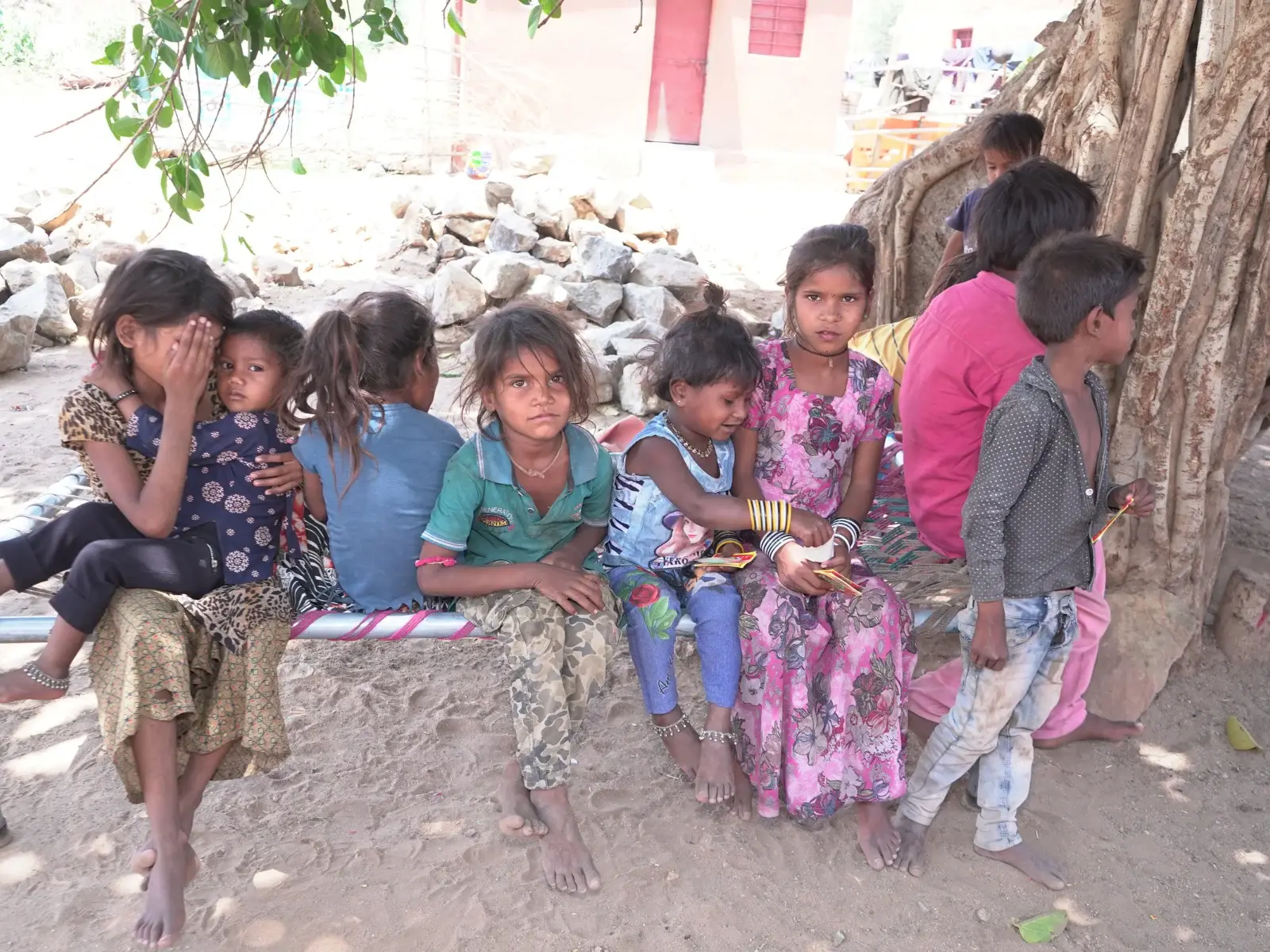
Poverty is rarely a one-generation accident – it is a system. In the tribal settlements around Ambaji, children as young as five once accompanied their parents to the temple steps, learning to extend a hand for alms before they ever held a pencil. With no school, no income and no alternative, parents passed on the only skill they knew: survival. Each generation inherited the begging bowl as if it were family property, and the cycle tightened with every passing year. This is what generational poverty looks like – not one family’s failure, but a pattern that repeats until something external breaks it.
Why One-Time Charity Is Not the Answer
Charity is generous, necessary in a crisis – and ultimately temporary. A meal feeds a child for a day; a blanket warms them for a winter. But when the meal is finished and the season turns, the family is exactly where it started. Charity manages poverty; it does not end it. That is why SSSK’s founder, Mrs. Usha Agarwal, built the organisation on a different philosophy: dignity over charity, empowerment not charity. From the very first year, the mission was not to give tribal children more – it was to give them the tools to become more. You can read the philosophy behind rescuing a child from begging and placing them in school.
The Data: How Education Breaks the Cycle of Generational Poverty
The evidence for education as the great equaliser is overwhelming. Global research consistently shows that each additional year of schooling raises an individual’s earning potential by roughly 10-15 percent – and for marginalised communities, the effect is even stronger. Education compounds like an investment: an educated adult earns more, makes better health decisions, participates more fully in civic life, and is far more likely to send their own children to school. One educated generation resets the path of every generation that follows. This is why development economists call education the highest-return intervention available – and why our impact page tracks school retention, not just school enrolment.
15 Years of Proof in Ambaji
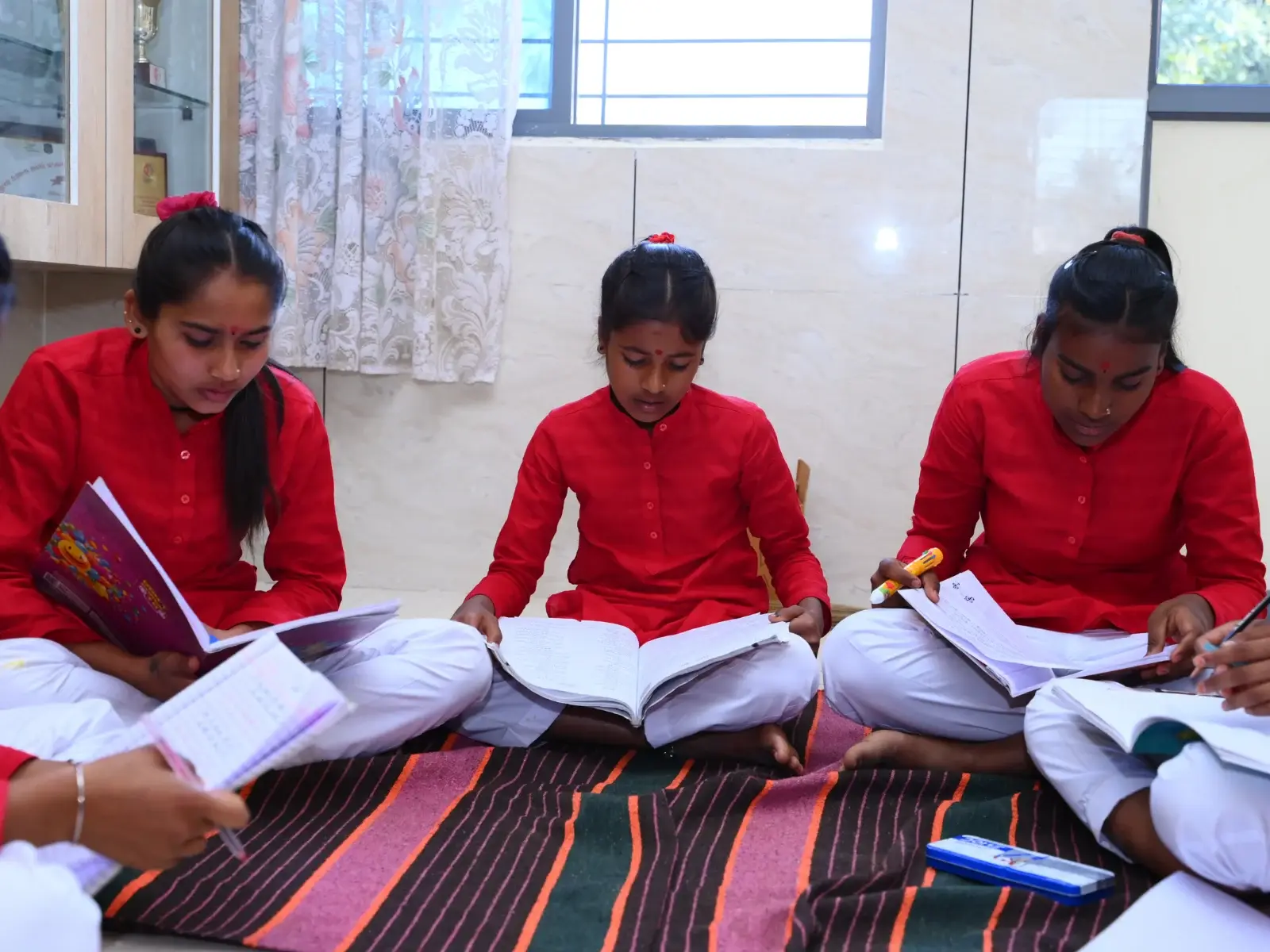
SSSK’s Bhiksha Nahi Shiksha campaign, launched in 2011, has been a live experiment in this theory – and the results are public. More than 200 children rescued from begging have been enrolled in formal schooling. Children at Shree Shakti Hostel maintain a near-total school retention rate, supported by nutrition, healthcare and daily tutoring. First-generation learners – children whose parents never entered a classroom – are now completing secondary school, pursuing higher education, and returning as teachers, nurses and social workers. In 2025, the TDO Office presented SSSK with a Recognition Certificate for its contribution to tribal development – an official endorsement of the education-first approach. The full record is documented in our 15-year retrospective of Bhiksha Nahi Shiksha.
What Happens When the Door Stays Closed
To understand why education is the only sustainable solution, consider the alternative. Without schooling, a child from the temple steps inherits exactly one asset: the begging bowl. With no literacy, they cannot read a wage slip, a medicine label or a loan document. They cannot challenge an unfair wage, claim a government scheme meant for them, or chart a different path for their own children. The cycle tightens with each generation – illiterate parents raising children who struggle to become literate, poverty passing down like a surname. This is not a theory; it is the quiet arithmetic of villages where schools never reached. Every child SSSK enrols is a door pushed open – and the fifteen-year record shows that once opened, it stays open, because educated children go on to enrol their own siblings, advocate for their neighbours and return as teachers to their own communities.
Beyond the Classroom: Education Ripples Through Everything
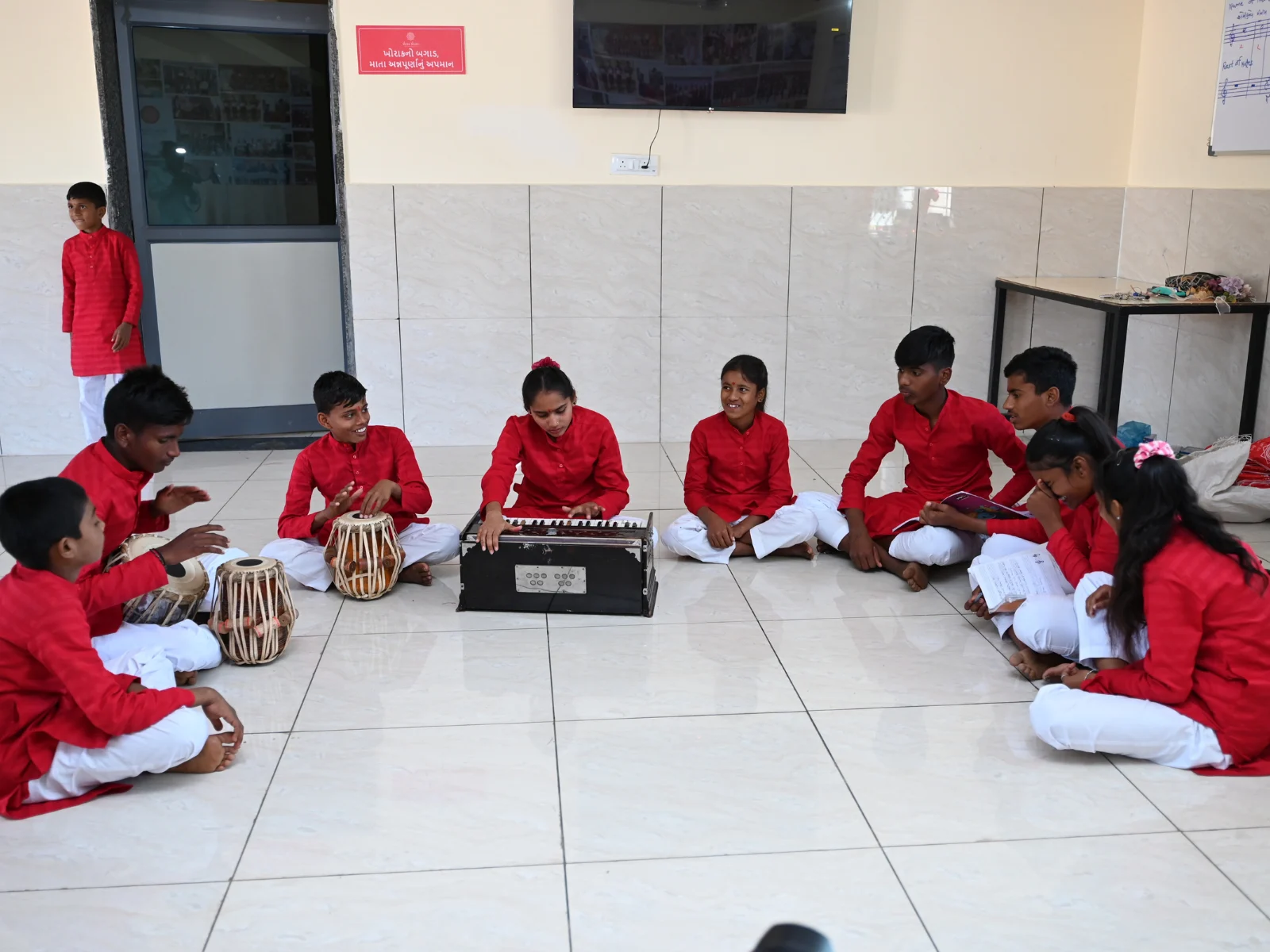
Education does not stop at the school gate. An educated tribal child becomes an adult who understands nutrition, healthcare and money – decisions that shape an entire household. At SSSK, that ripple effect is visible everywhere: children who study at Shree Shakti Hostel grow into the athletes, musicians, artisans and earners of tomorrow; mothers educated through our women’s programmes start businesses; siblings follow the example set at home. Breaking the cycle of poverty – one day, one classroom, one child at a time – is exactly what our full range of SSSK programmes is engineered to do.
Conclusion
Fifteen years ago, a tribal child on the steps of the Ambaji temple had two possible futures: a lifetime of dependence, or a school bag. SSSK chose the school bag – and the choice has multiplied. Education is not a quicker fix or a cheaper one; it is the only fix that lasts, because it transforms the person who carries it. From dependence to independence, from begging bowl to school bag, every enrolled child is proof that the cycle can be broken. The next generation of that proof is waiting at the temple steps right now. When you support a tribal child’s education, you are not funding a single year – you are funding an exit from generational poverty, with every child free to dream, and every dream free to soar.
Frequently Asked Questions
1. Why is education the only sustainable solution to end generational poverty?
▲
2. What is Bhiksha Nahi Shiksha?
▲
3. How does education break the cycle of poverty?
▲
4. What impact has SSSK’s education programme had so far?
▲
5. Why is charity alone not enough to end poverty?
▲
6. How can I sponsor a tribal child’s education with SSSK?
▲
भिक्षा नहीं शिक्षा | Education, Not Begging
Join the Mission
Shree Shakti Seva Kendra Shines at State-Level School Band Competition
Shree Shakti Seva Kendra Shines at State-Level School Band Competition Shree Shakti Seva Kendra, Ambaji, has achieved a...
Read More →5 Handmade Products That Tell the Story of Tribal Artisans’ Resilience | SSSK
Every thread, bead and brushstroke from the Shree Shakti Self-Help Group (SHG) carries a decision: from dependence to in...
Read More →Young Athletes Demonstrate Speed, Strength and Determination
Young Athletes Demonstrate Speed, Strength and Determination Students of Shree Shakti Seva Kendra, Ambaji, have made the...
Read More →10 Tribal Children, 10 Dreams: Students Breaking the Cycle of Poverty | SSSK
On the temple steps of Ambaji, the sight of small hands holding begging bowls is fading — replaced by hands holding penc...
Read More →