Every thread, bead and brushstroke from the Shree Shakti Self-Help Group (SHG) carries a decision: from dependence to independence. These 5 handmade products by tribal artisans in Ambaji, Banaskantha, are not souvenirs; they are proof of livelihoods rebuilt with dignity, skill and market access.
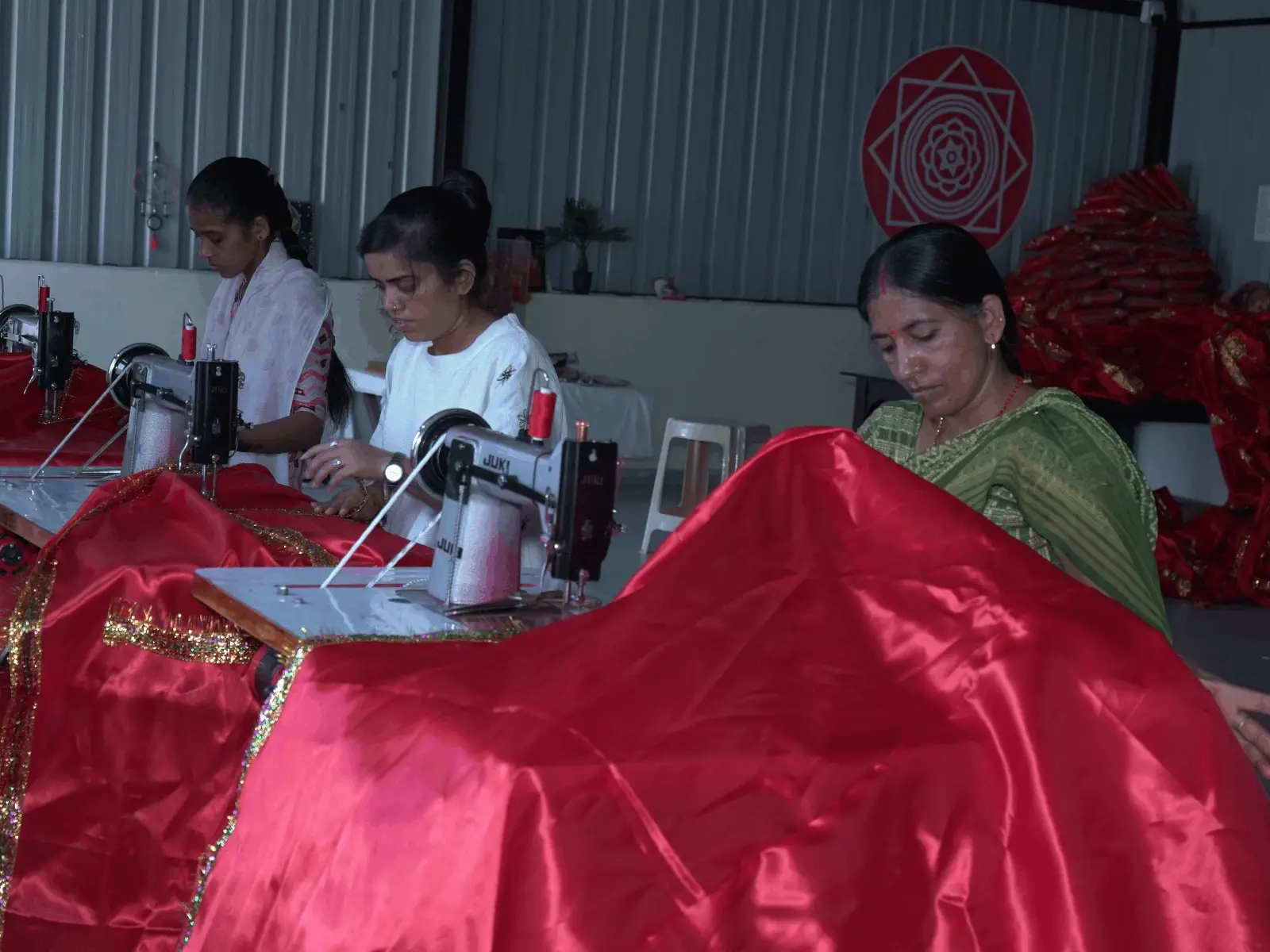
Over 50 women now earn through SSSK’s women empowerment and livelihood projects, turning home-based craft into household income and household voice. Here are five products that show why handmade is not a trend here — it is a restoration of tradition and a pathway to self-reliance. Browse the broader livelihood projects and handmade collection.
The Hands Behind the Handmade: Women Who Chose From Dependence to Independence
Before the SHG, many women had skill but no market — embroidery learned from grandmothers, weavingDone on floor looms, jewellery strung for family festivals. What was missing was pricing, quality consistency, photography and a place to sell beyond the village.
SSSK filled that gap with training in design, finishing, costing and savings — and with collective strength. Fifteen women with a few sewing machines became 50+ entrepreneurs with bank accounts, ledgers and repeat customers. As one artisan, now handling accounts, said, “I never imagined I would have my own bank account.” That line is empowerment, not charity — in one sentence. Learn more about this sisterhood on the women empowerment page.
5 Handmade Products That Carry Culture, Resilience and Hope
Each product below takes weeks of hand work and carries motifs passed across generations. When you choose one, you fund not just materials but time, skill and the decision to stay with craft as a livelihood.
1. Hand-Embroidered Sarees and Dupattas
Dense, even stitches form tribal geometries — diamonds, peacocks, borders that signal village and family. Each saree can take 2–3 weeks, with colour matching done by eye and finish checked under daylight before packing. Customers value the drape and the story: tradition worn, not just displayed.
2. Handwoven Textiles for Home and Wear
Using pit-looms and frame looms, artisans weave yardage and stoles that are both contemporary and rooted. The handloom’s slight irregularity is the signature of authenticity — breathable, strong and repairable. Perfect for table linen, curtains and slow-fashion wardrobes.
3. Beaded Jewellery — Colour, Rhythm and Identity
Hand-strung necklaces, tasselled earrings and layered chokers reflect festival palettes — reds, yellows, turquoise — assembled with locally sourced beads and secure, durable stringing. No two pieces are identical; each is finished with a maker’s final tug-test for strength.
4. Eco-Friendly Home Decor — Diyas, Baskets and Painted Pottery
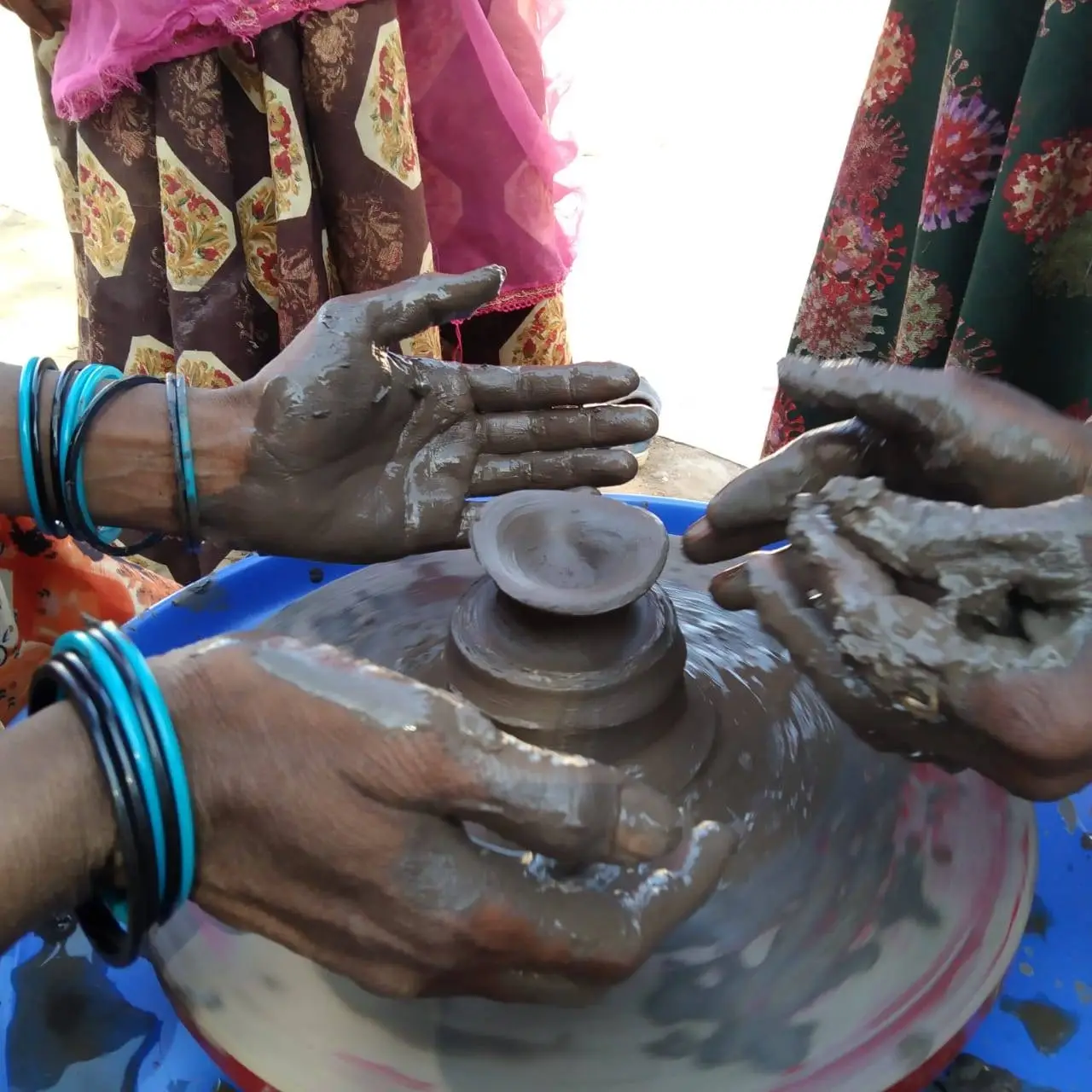
Made from sustainable, locally sourced materials, these pieces bring tribal artistry into modern homes without plastic excess. Clay diyas shaped by hand, baskets coiled from palm, pots painted with earth pigments — as seen in artisan hands shaping clay diyas — prove that sustainable can be beautiful and useful.
5. Traditional Patchwork Quilts — Nothing Wasted, Everything Valued
Quilts stitched from rescued fabrics are a masterclass in resourcefulness. Offcuts become geometry; geometry becomes warmth. Each quilt diverts textile waste while wrapping a child or guest in colour — resourcefulness made visible, and saleable.
More Than Income: How Livelihood Restores Dignity and Keeps Children in School
Income is only the first change. The second is voice — women who earn are consulted on household decisions, from school choice to health visits. The third is investment — children of SHG members attend school more regularly because fees feel manageable and aspirations feel shared.
SSSK tracks this ripple intentionally. Livelihood is linked to child education and hostel care, so that economic gain and educational gain reinforce each other. One SHG can transform not just 15 women but an entire settlement’s sense of what is possible.
Talent knows no boundaries here either — an artisan who once stitched only for family now packs orders that travel to Ahmedabad and beyond, with a packing slip she wrote herself.
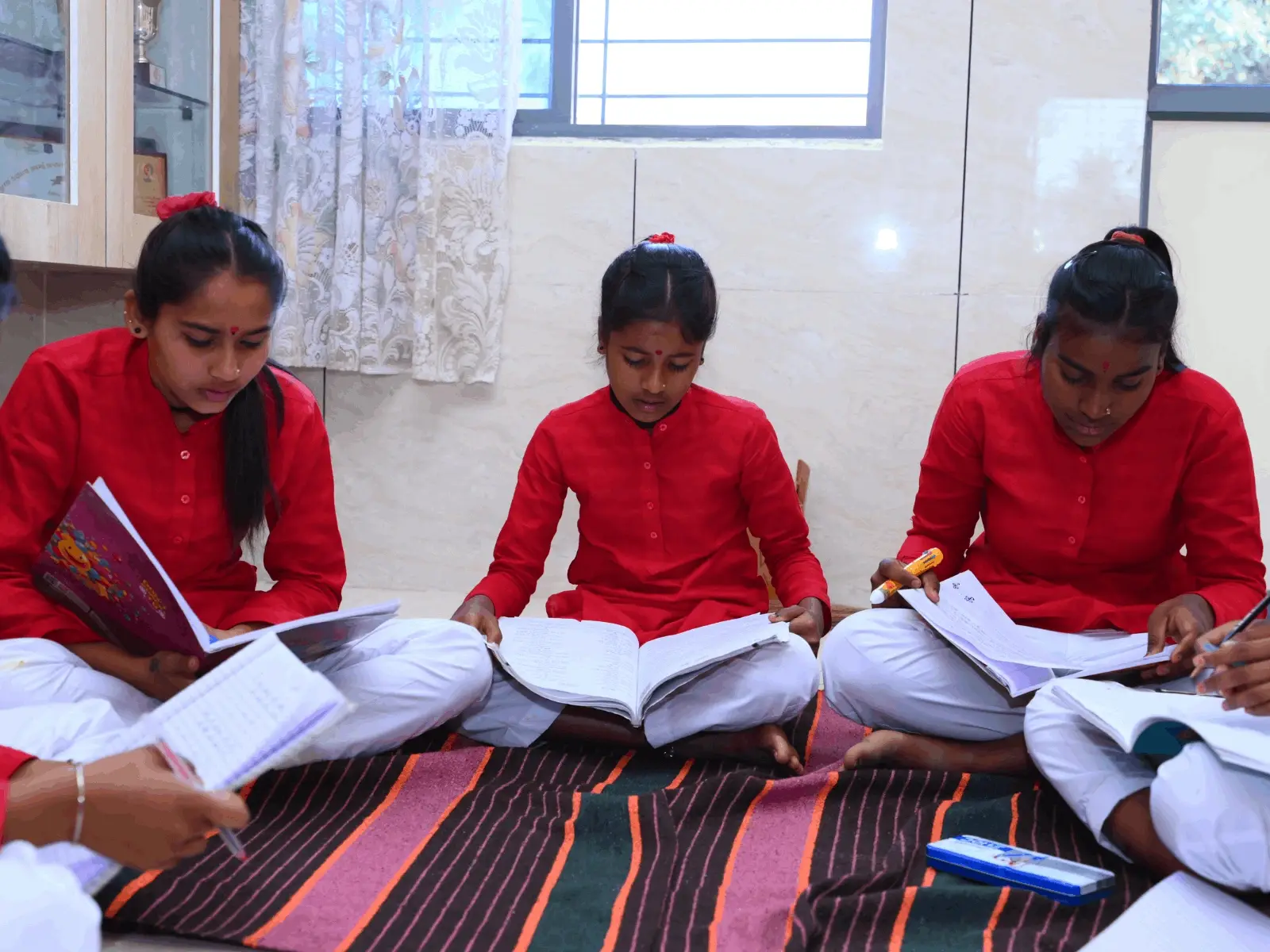
Why Choosing Handmade Means Choosing Empowerment, Not Charity
When you purchase a handmade product from the SHG, you are not giving alms; you are affirming skill, time and cultural knowledge with a fair price. That is dignity over charity in practice — trade, not pity.
Funds circulate locally: raw material bought from nearby suppliers, wages saved in SHG bank accounts, profits reinvested in a child’s school kit or a health camp visit. See the full circle of impact across SSSK programmes and how 2025’s TDO Recognition Certificate acknowledged this connected model.
Design stays collaborative — artisans adapt traditional motifs to contemporary palettes suggested by urban customers, but never at the cost of cultural coherence. The result is a product that feels at home in a city apartment and honest in the village that made it.
Conclusion: Carry a Story, Not Just a Product
These five products prove that resilience has texture — you can see it in a hem, feel it in a bead’s knot, hold it in a quilt’s weight. They are the material form of begging bowl to school bag: hands that once waited for coins now measure, cut, stitch and sign a dispatch register.
If you would like to carry that story forward, explore the livelihood projects page for current collections and exhibition dates, or donate to support training and market linkages. Every purchase and every contribution keeps a loom singing and a child in school.
Frequently Asked Questions
1. What is the Shree Shakti Self-Help Group?
▲
2. What handmade products do tribal artisans make?
▲
3. How does buying handmade help tribal women?
▲
4. Where can I buy SHG handmade products?
▲
5. How else can I support the SHG besides buying?
▲
भिक्षा नहीं शिक्षा | Education, Not Begging
Join the Mission
Shree Shakti Seva Kendra Shines at State-Level School Band Competition
Shree Shakti Seva Kendra Shines at State-Level School Band Competition Shree Shakti Seva Kendra, Ambaji, has achieved a...
Read More →Young Athletes Demonstrate Speed, Strength and Determination
Young Athletes Demonstrate Speed, Strength and Determination Students of Shree Shakti Seva Kendra, Ambaji, have made the...
Read More →10 Tribal Children, 10 Dreams: Students Breaking the Cycle of Poverty | SSSK
On the temple steps of Ambaji, the sight of small hands holding begging bowls is fading — replaced by hands holding penc...
Read More →Handmade with Heart: The Journey of a Handicraft from Artisan to Your Home
Handmade with Heart: The Journey of a Handicraft from Artisan to Your Home Every gift you bring into your home carries a...
Read More →