Handmade with Heart: The Journey of a Handicraft from Artisan to Your Home
Every handmade product that reaches your home carries a story long before it carries a price tag. In the tribal settlements around Ambaji and Danta in Banaskantha, that story begins not in a factory, but at a small table by a doorway, where a woman steadies a piece of red fabric, threads a needle, and stitches dignity into every line. This is the journey of handmade products by tribal artisans supported by Shree Shakti Seva Kendra (SSSK) — from artisan hands to your home, from dependence to independence, and from a begging bowl to a school bag.
For more than 15 years, since 2011, SSSK has walked alongside the Adivasi and Bharathari communities at Gabbar and Ambaji. What began as भिक्षा नहीं शिक्षा — Education, Not Begging inside classrooms and the Shree Shakti Hostel, a family away from home for 200+ children, has grown into livelihoods that let mothers earn with honour. Today, more than 50 women in SSSK-linked self-help groups (SHGs) train, produce and sell together — proving that talent knows no boundaries when opportunity finally arrives.
Where the Journey Begins: Inside the Homes of Tribal Artisans in Ambaji and Danta
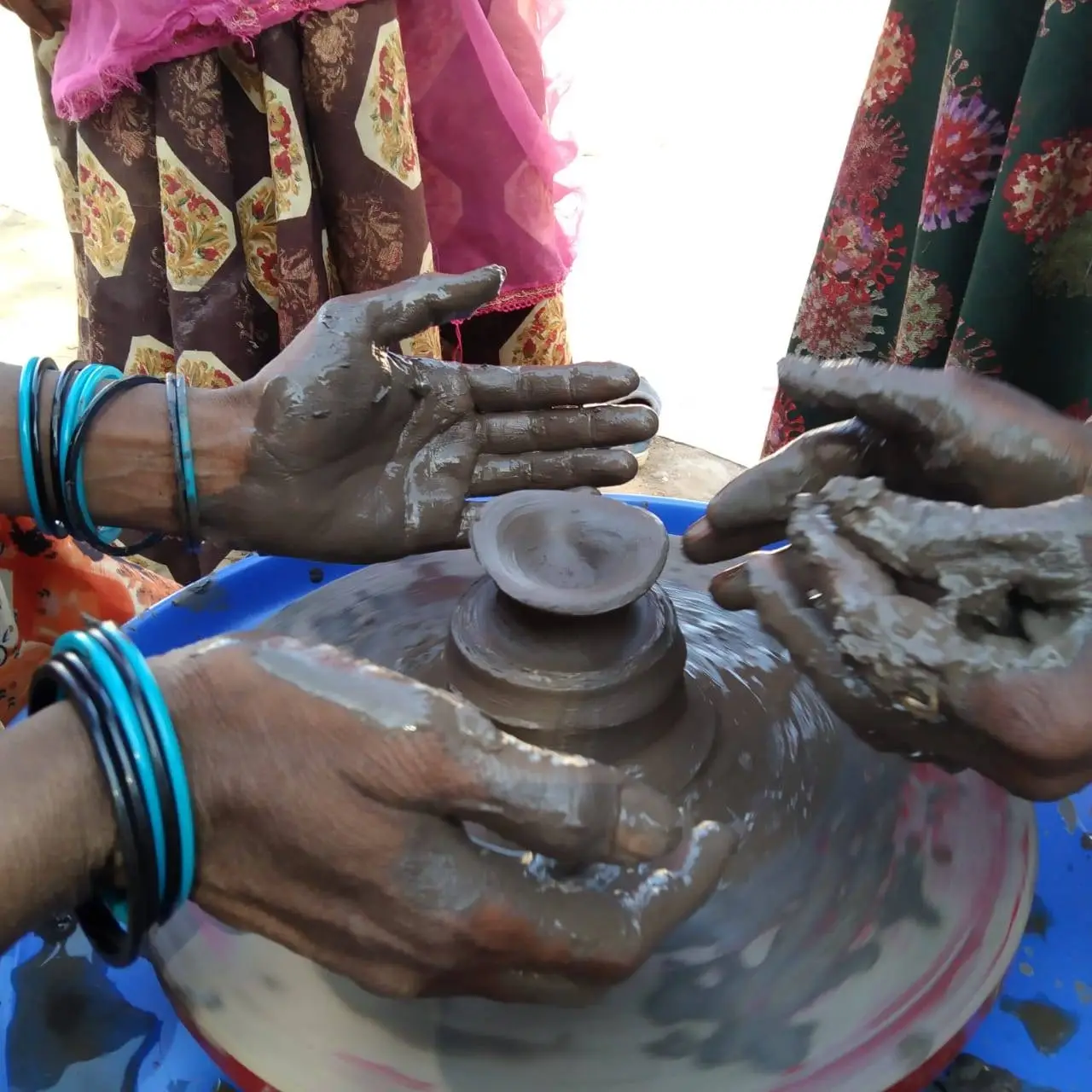
The journey does not start at a shop counter. It starts in the morning quiet of Panchha village and the bylanes near the Ambaji temple steps, where women once accompanied children to seek alms. Many of SSSK’s artisans are first-generation learners’ mothers — resilient women who had skill but no market, time but no training, and hope but no capital. Banaskantha’s tribal hamlets hold extraordinary craft traditions — hand-stitching, embroidery, block work, clay diya making, beadwork and fabric finishing — passed down without ever being priced fairly.
SSSK’s livelihood projects in Ambaji began by listening. Field workers sat with women in their homes, mapped existing skills, and asked a simple question: what can you make with pride? From those conversations, small clusters of 10–12 women formed into self-help groups. They chose names, opened group savings accounts, and set a weekly rhythm — learn together, produce together, save together. In 2025, this community-led work received a Recognition Certificate from the TDO Office, Danta — an affirmation that grassroots livelihood, done with dignity, counts as real development.
The Hands That Create: Skills, Self-Help Groups and Dignity Over Charity
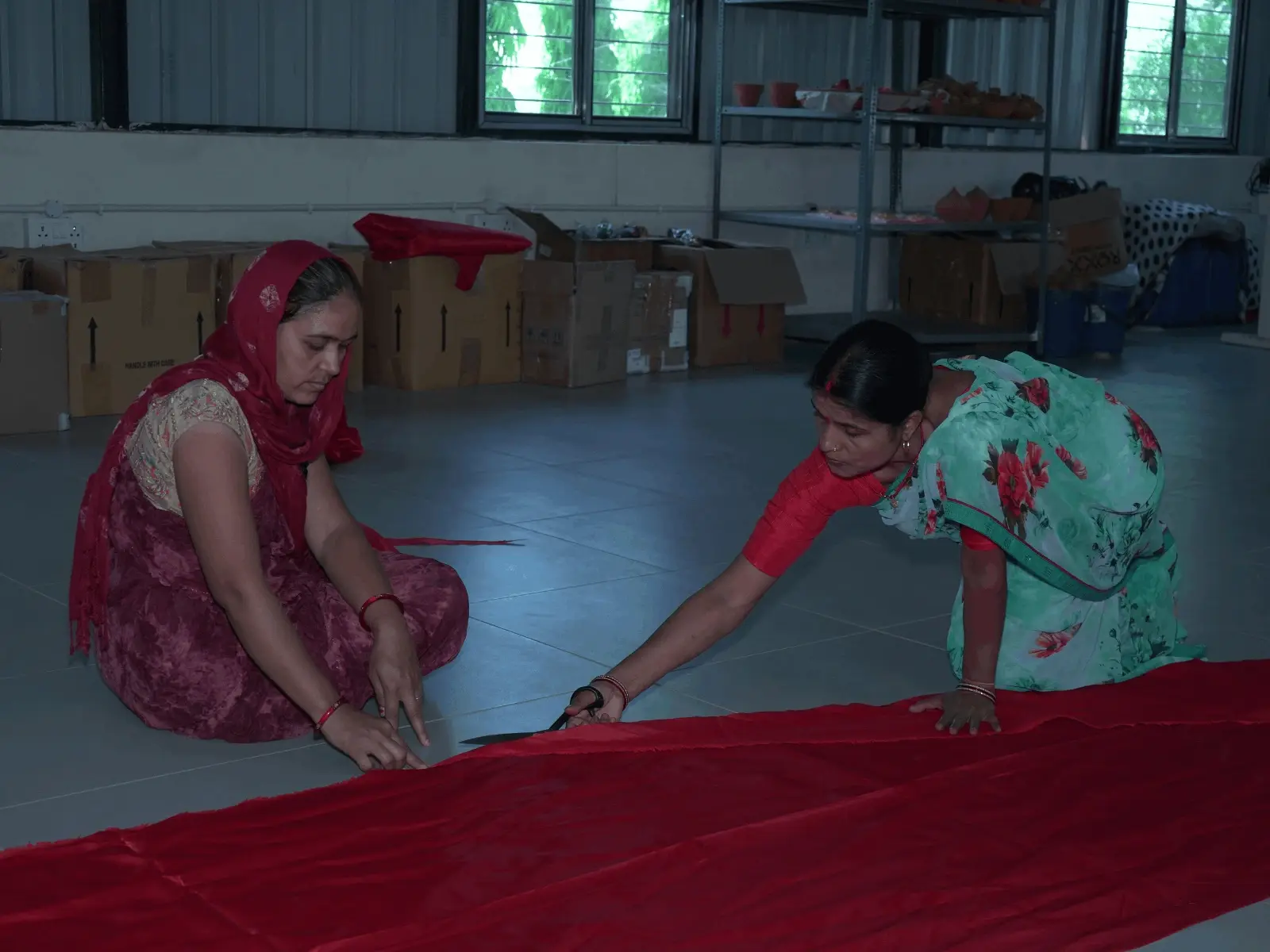
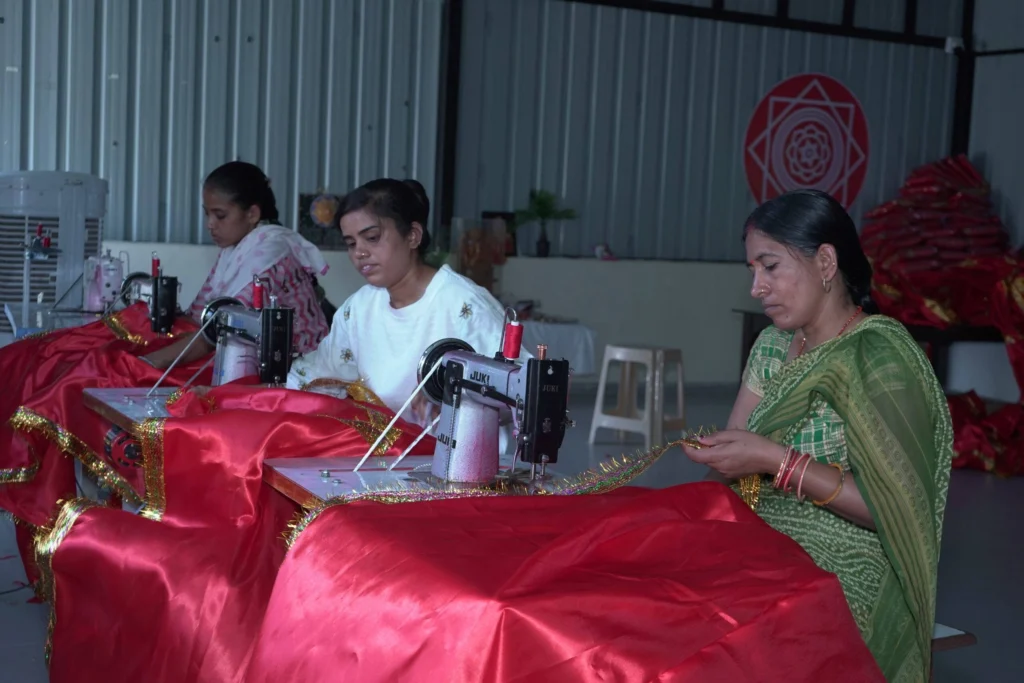
At SSSK’s training spaces, the second chapter of the journey unfolds: skill with structure. Women who once stitched only for family use now learn to work to market standards — measuring, cutting, finishing, quality checking — without losing the handmade character that makes each piece unique. Training is led by local master trainers and supported through SSSK’s Nari Shashaktikaran skill training programme and broader skill development initiatives. Machines are provided, maintenance is taught, and every woman learns to train the next woman.
Mrs. Usha Agarwal, founder of SSSK, often says, “We do not give charity, we build capability.” That philosophy — dignity over charity, empowerment, not charity — shapes every SHG meeting. Women set their own production targets, discuss designs, manage raw material purchases and decide how profits are shared. For many, this is the first time their signature goes on a register and their name goes on a product tag. The group, not an outside buyer, owns the decision. The artisan is not a beneficiary; she is an entrepreneur.
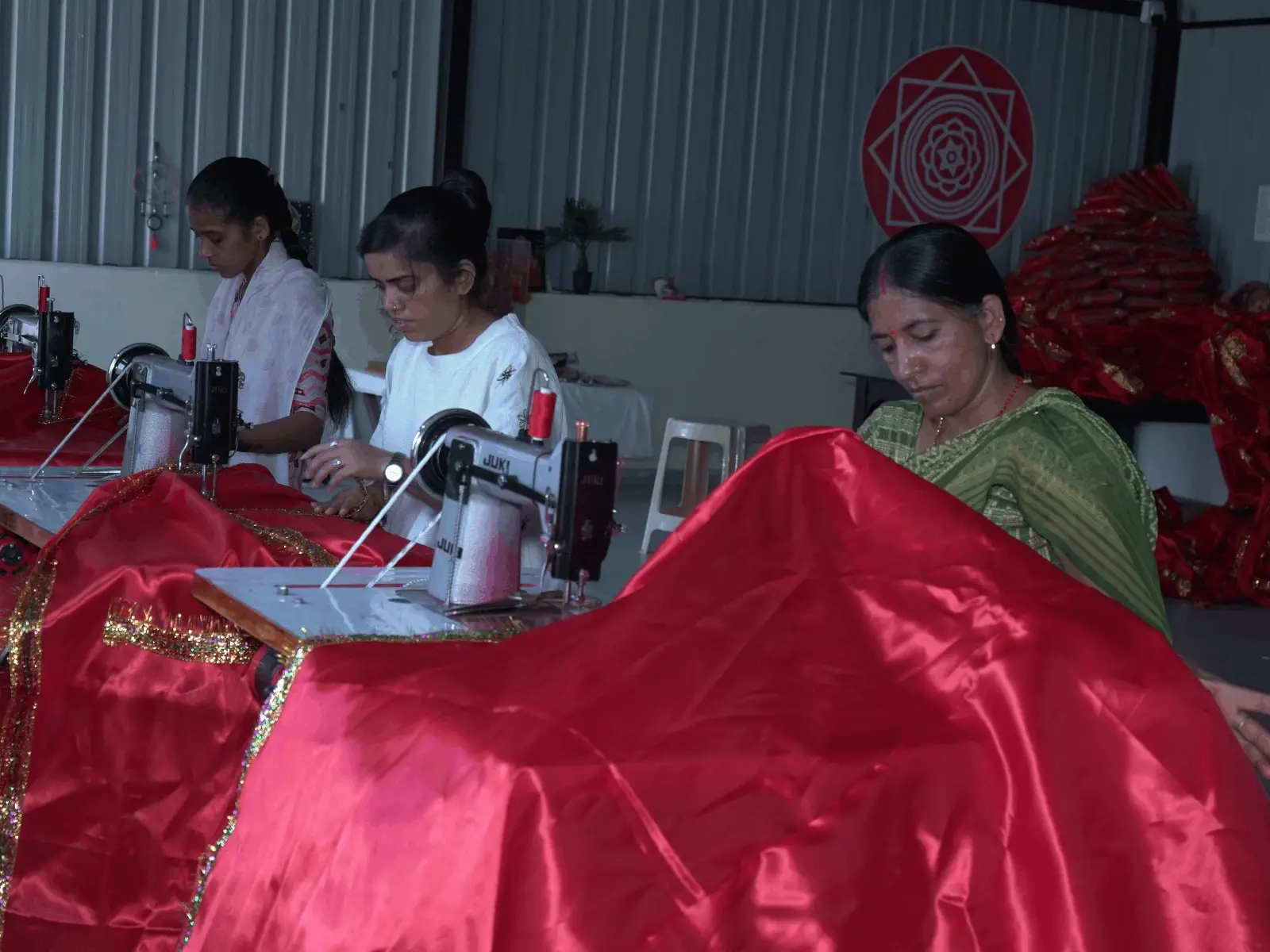
“Earlier I only stitched at home when needed. Now I finish 15 to 20 pieces in a week with my group, and the payment comes to my own account. My daughter sees me as an artisan, not just a housewife.” — SHG member, Panchha village
“We replaced the begging bowl with a school bag for the children. For the mothers, we replaced uncertainty with a skill and a steady income. That is how a family stands on its own feet.” — Mrs. Usha Agarwal, Founder, Shree Shakti Seva Kendra
From Raw Material to Finished Product: Pricing with Fairness, Not Pity
The third step of the journey is the most delicate: pricing. A handmade product cannot be priced like a factory product, and SSSK refuses to price it with pity either. Each piece is costed transparently — raw material, artisan time, group savings, and a fair margin that stays with the maker. This is self-help group products done right: no middleman taking the lion’s share, no distress sale at the temple gate.
Take a hand-stitched pouch or clay diya set. The SHG sources material in bulk, and every product is checked twice — by the artisan and the group leader — for strength and finishing. When you buy, you are not helping a poor artisan; you are buying from a talented tribal entrepreneur whose work has been valued correctly for the first time.
This links to SSSK’s wider vision. Just as women’s empowerment at SSSK connects education, health and livelihood, fair pricing connects skill to savings. Mothers who earn can keep daughters in school — closing the loop that began with भिक्षा नहीं शिक्षा. The playground is as important as the classroom, and the workshop lets learning translate into earning.
Finding a Market: How Self-Help Group Products Reach Your Home
A beautiful product is only half the journey; market access is the other half. Without a market, skill stays at home. SSSK bridges that gap in three practical ways that have grown steadily over the last five years.
1. Local exhibitions and temple-route stalls: Given Ambaji’s year-round pilgrim flow, seasonal stalls near the temple and at district melas offer the first market. Pilgrims who came to seek blessings leave with a handmade bag, a diya, or a stitched cover — carrying home a piece of Banaskantha’s craft and a story to tell.
2. Institutional and gifting orders: Schools, hostels, local government programmes and well-wishers place bulk orders for events — festival gift sets, school bags, cloth folders, decorative diyas. These orders give SHGs predictable work and let them plan production for weeks, not just days.
3. Direct outreach through SSSK’s network: Visitors to the SSSK campus and its programmes, donors, volunteers and supporters order products through the centre or at events like Gujarat Foundation Day celebrations. Each order is packed by the women themselves, with a small note about the group that made it. No anonymous factory line — a direct handshake, even if by post.
The People Behind the Product: Artisan Profiles of Resilience
Behind every product is a profile that rarely makes it to the tag. A young mother from Danta who never held a bank passbook before, now maintains the SHG ledger. A 42-year-old who left tailoring after marriage and returned after joining an SSSK cluster, now teaching two younger women to finish borders evenly. These are not stories of pity; they are stories of growth — every child free to dream, every dream free to soar. From savings, a steel trunk is bought, school fees are paid without borrowing, and festival gifts are handmade and sold. This is breaking the cycle of poverty — one stitch at a time.
Why Your Purchase Matters: Breaking the Cycle One Product at a Time
When you choose a handmade product by a tribal artisan over a mass-produced alternative, you are choosing slower, fairer production and a family moving from dependence to independence without leaving their village. Each purchase pays the artisan today, funds the SHG’s next raw material, and keeps a girl in school tomorrow. Over 15 years, SSSK has seen this loop close: hostel children become band performers, sports academy athletes win district medals, and SHG mothers become trainers.
Buy consciously, buy directly, and buy as a supporter — not a saviour. Choose self-help group products for festivals, gifting or home décor, and tell the story that comes with them. Your shelf becomes their showcase.
Conclusion
Handmade with heart is not a slogan at SSSK — it is a system. From the doorway workshop in Ambaji and Danta to the quality check, from fair pricing to the stall where a pilgrim pauses, from the artisan’s hands to your home, every step is designed to preserve dignity and build independence. The begging bowl has been replaced with a school bag; the school bag is now joined by a tool kit, a sewing kit, and a savings passbook. That is the full journey: education feeding skill, skill feeding livelihood, livelihood feeding the next generation’s education.
The next time a handmade pouch or set of clay diyas arrives at your door, notice the human variation in the glaze. Someone in Banaskantha finished it for you — not out of helplessness, but out of talent and pride. By choosing handmade products by tribal artisans and supporting SSSK’s livelihood and education work, you keep that journey moving — every child free to dream, every dream free to soar.
Frequently Asked Questions
1. What are self-help group products at SSSK?
▲
2. Who are the tribal artisans who make SSSK handicrafts?
▲
3. How does SSSK ensure fair pricing for handmade products?
▲
4. Where can I buy handmade products by tribal artisans from SSSK?
▲
5. How does buying handmade products help tribal families?
▲
6. How can I support SSSK’s livelihood and women empowerment work?
▲
भिक्षा नहीं शिक्षा | Education, Not Begging
Join the Mission — Choose Handmade, Choose Dignity
Why Education Is the Only Sustainable Solution to End Generational Poverty
Why Education Is the Only Sustainable Solution to End Generational Poverty For generations, tribal families in Banaskant...
Read More →From Tribal Villages to the Track: Grooming Young Athletes at Shakti Sports Academy | SSSK
From Tribal Villages to the Track: Grooming Young Athletes at Shakti Sports Academy On the outskirts of Ambaji, past the...
Read More →From Ambaji to Amreli: SSSK Bagpiper Band Shines at Gujarat’s State-Level Independence Day 2026
From Ambaji to Amreli: SSSK Bagpiper Band Shines at Gujarat’s State-Level Independence Day 2026 The photographs from the...
Read More →Gujarat’s First Girl Tribal Bagpiper Band to Perform Before Hon’ble Chief Minister of Gujarat on Independence Day 2026
Gujarat's First Girl Tribal Bagpiper Band to Perform Before Hon'ble Chief Minister of Gujarat on Independence Day 2026 O...
Read More →