From Begging Bowl to School Bag: Real Stories of Children Whose Lives Changed Forever
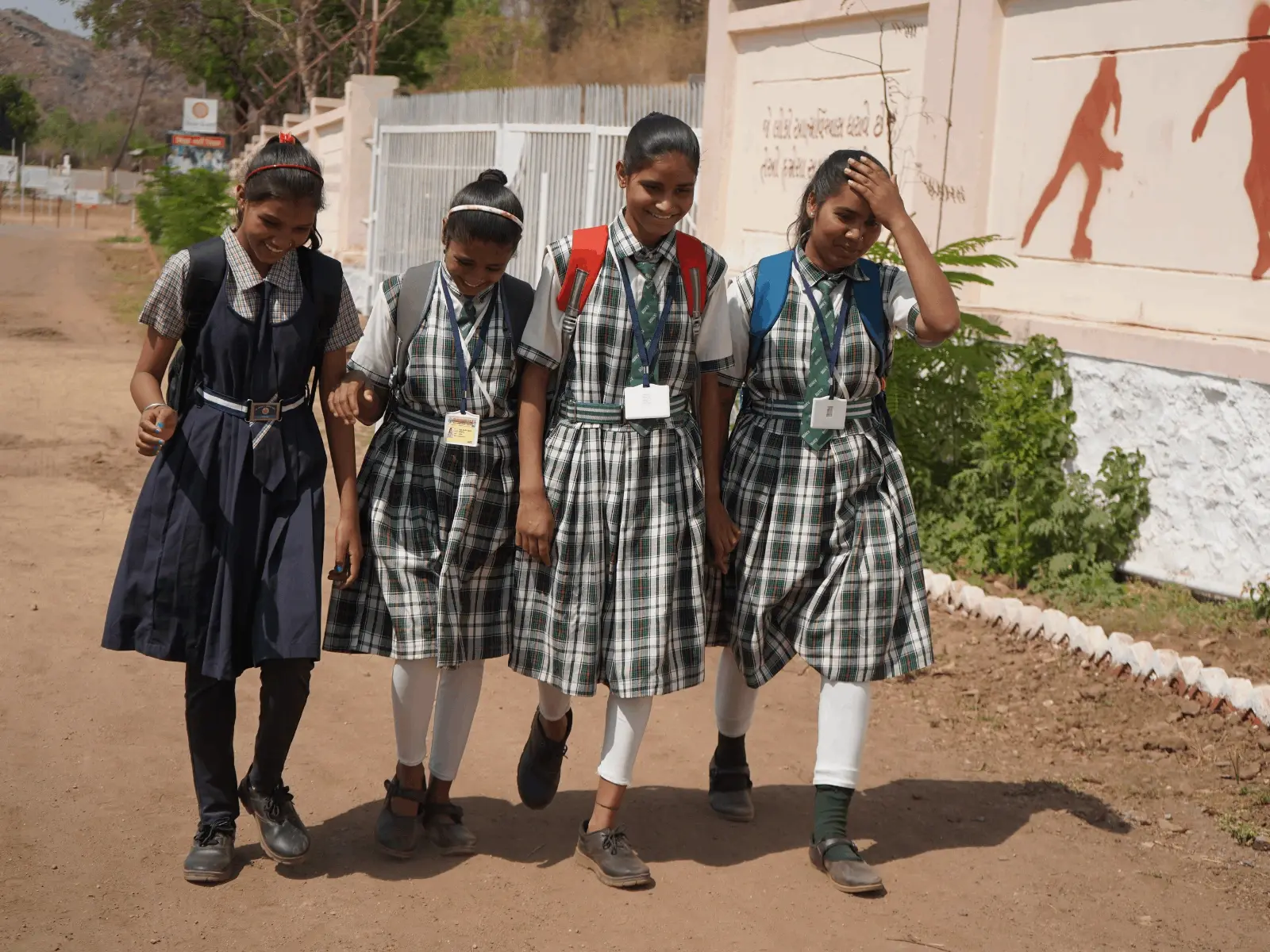
On the busy steps leading to the Ambaji temple, many visitors once saw small hands holding begging bowls. Today, those same hands hold pencils, books and school bags. These Bhiksha Nahi Shiksha success stories are not miracles. They are the result of 15 years of steady work by Shree Shakti Seva Kendra (SSSK), founded in 2011 by Mrs. Usha Agarwal in Ambaji, Banaskantha.
Through child education programmes, safe hostel care for 200+ children, and support from sponsors across India, SSSK has helped first-generation learners move from begging bowl to school bag — with dignity over charity at every step.
What Bhiksha Nahi Shiksha Success Stories Really Mean in Ambaji
भिक्षा नहीं शिक्षा — Education, Not Begging. This slogan is painted on hearts before it is painted on walls at SSSK. When field workers meet families near Ambaji temple steps and surrounding Banaskantha settlements, they do not start with lectures. They start with listening. They learn why a child was spending days with a begging bowl, what the family needs, and how schooling can become possible.
Each child rescued from begging follows a personal plan: counselling for parents, school admission, uniforms and books, daily study support, health check-ups, and a safe place to stay when home is far from school. Progress is tracked term by term, and can be seen in our documented impact and transformation stories. It is breaking the cycle of poverty one day at a time — attendance today, reading fluency next month, confidence by year end.
“We never ask a child to forget where they came from. We ask them where they want to go — and then we walk with them. When a child replaces the begging bowl with a school bag, the whole family begins to believe that change is possible.”
— Mrs. Usha Agarwal, Founder, Shree Shakti Seva Kendra
A Family Away From Home: Life Inside Shree Shakti Hostel
For many first-generation learners, distance is the biggest barrier. Villages scattered across the Aravalli hills can be hours from the nearest secondary school. The Shree Shakti Hostel solves this by becoming a family away from home — with nutritious meals, supervised study hours, clean dormitories, and caring wardens who know every child by name.
A typical day blends routine and warmth: morning prayers, school, evening tuition, games, and story time. Children learn to make their beds, wash their plates, help younger students, and prepare for exams together. Learn more about daily rhythms and care on our hostel and child care page.
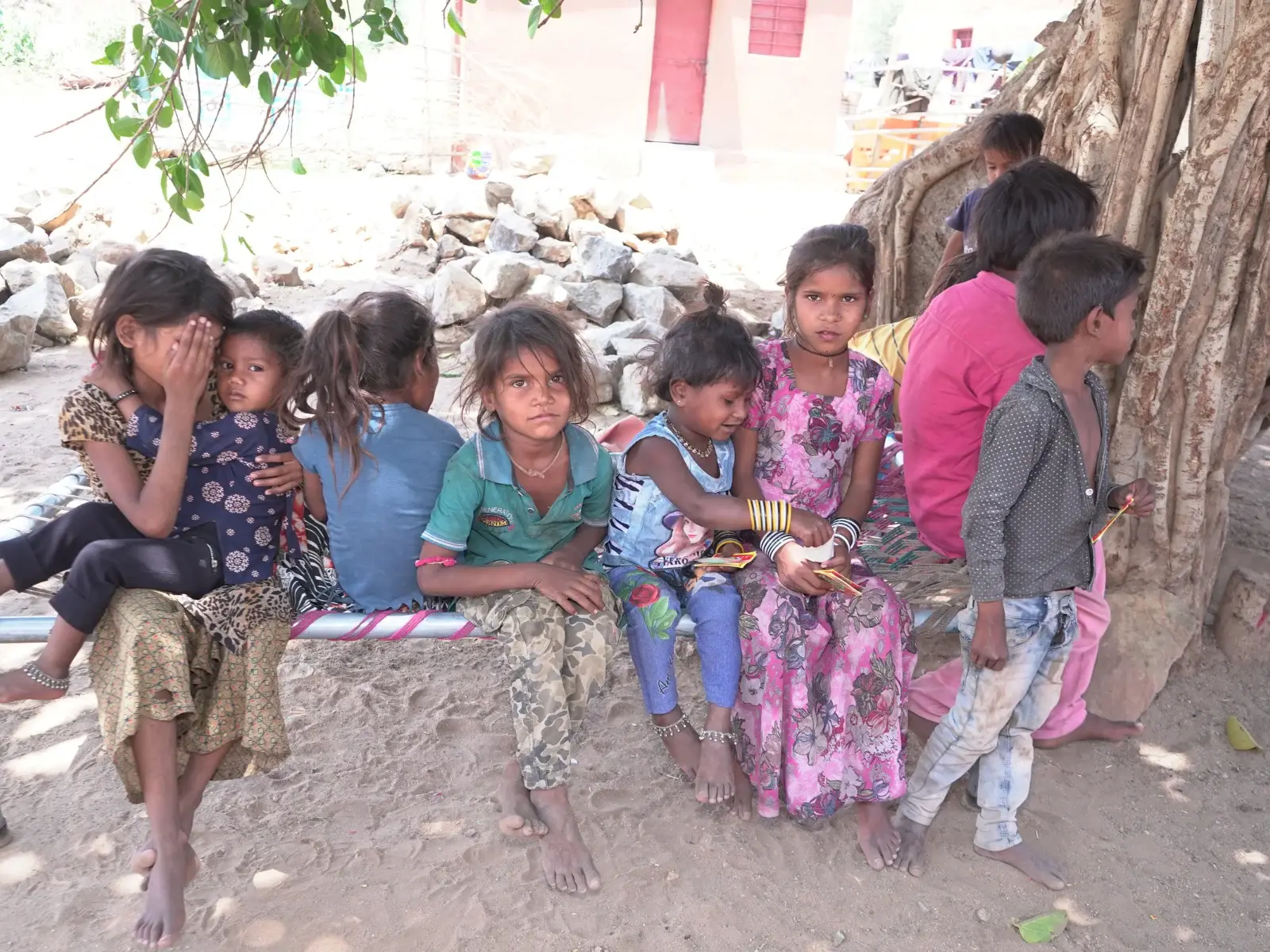
“Earlier I felt shy to speak in class. Now I help my younger brother with his homework. The hostel didis say every child free to dream, every dream free to soar — I want to become a teacher.”
— Hostel student, Class 7 (name withheld to protect privacy), Ambaji
Another student, now in Class 10, remembers her first week: “I missed my mother a lot. Then the older girls taught me to tie my hair, keep my books clean, and revise every night. Now this feels like home too.” These small bonds are what keep children in school long after the initial rescue.
From Temple Steps to National Stages: Learning Beyond the Classroom
At SSSK, education goes far beyond textbooks. Talent knows no boundaries, and children who once sat quietly at temple steps now perform with confidence. The Shree Shakti Bagpiper Band, formed in 2017, has performed before the Prime Minister and at state-level events, giving young achievers a stage and a sense of pride that classrooms alone cannot give.
Read how music builds discipline and self-belief on our Bagpiper Band page. Sports, art, and cultural programmes run alongside studies, because confidence built on the field or stage returns to the classroom as courage to answer, ask, and lead.
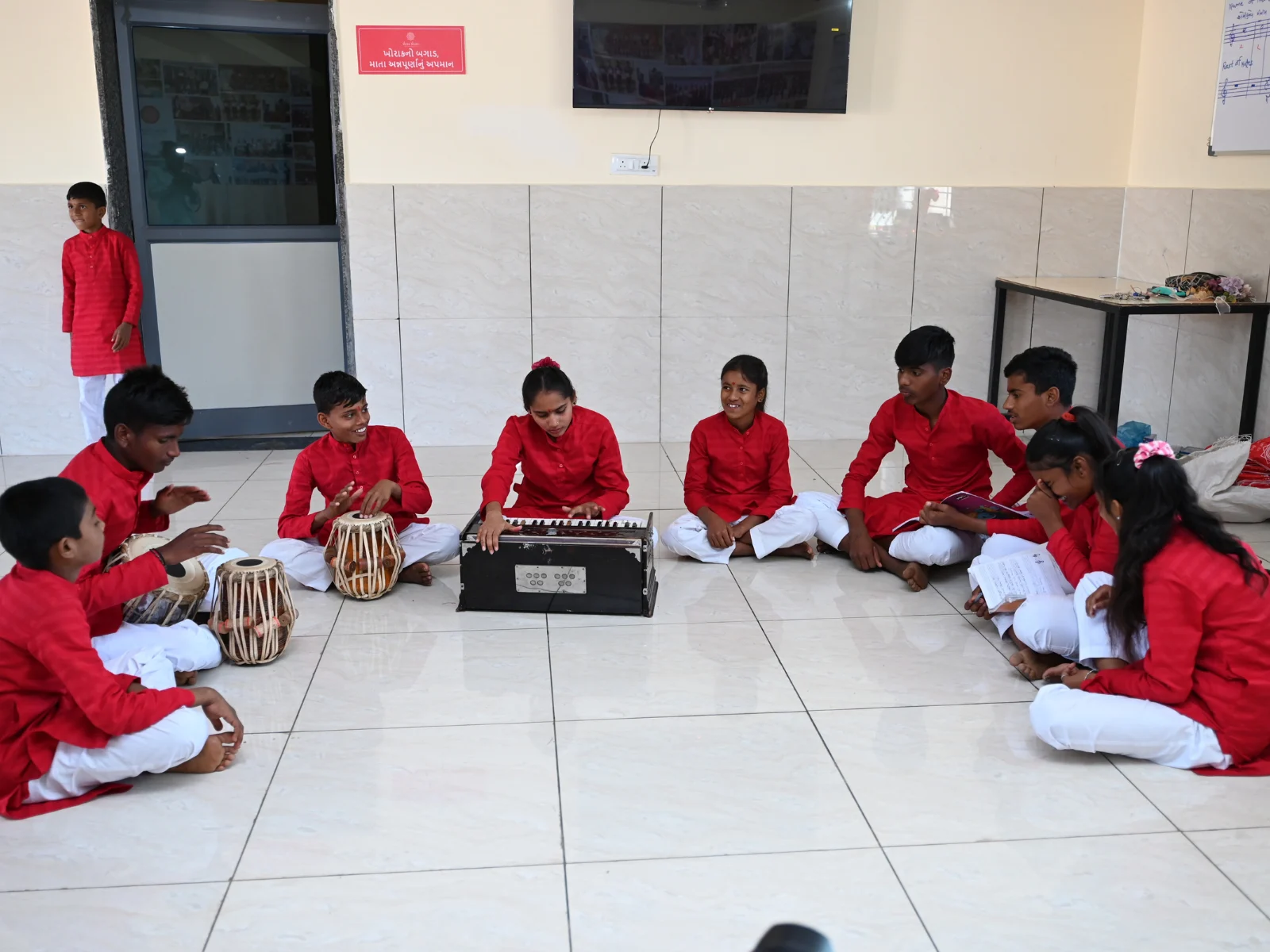
“When I wear the band uniform, I feel tall. People clap for us. My mother says she never imagined villagers would take photos with her son.”
— Band member, age 14 (name withheld), Shree Shakti Bagpiper Band
Breaking the Cycle of Poverty One Day at a Time: How Education Changes Families
When one child stays in school, the whole household shifts. Mothers who once accompanied children for begging now join self-help groups — 50+ women earning through tailoring, handicrafts and livelihood projects. Fathers take pride in report cards. Younger siblings insist on going to school too.
This is why SSSK was honoured with the TDO Office Recognition Certificate in 2025: officials noted consistent school retention, community trust, and transparent work over 15 years since 2011. From dependence to independence, families move step by step — a ration card linked, a health camp attended, a daughter completing Class 12, a son joining ITI training.
One mother from a Banaskantha settlement shared: “Earlier people gave us coins. Now they ask my daughter to read their letters. That respect is bigger than money.” Dignity, not sympathy, is the true measure of change.
How Child Sponsorship Keeps Every Child Free to Dream
Behind every success story is someone who chose to stand beside a child. Child sponsorship at SSSK covers what matters most: safe accommodation, nutritious food, school fees and supplies, health care, and mentoring. Sponsors receive updates and know exactly how their support is used.
If you have ever wondered how to help a child rescued from begging stay in school for the long term, explore Save a Child from Begging to see transparent options — from monthly support to full-year sponsorship. Every contribution helps keep a school bag on a shoulder where a begging bowl once hung.
Conclusion: Dignity Over Charity — Why Your Support Matters
The children in these stories are not defined by where they started. They are students, musicians, athletes and future teachers — talented tribal youth writing new chapters with their own hands. They remind us that dignity over charity is not a slogan. It is a method: listen first, educate consistently, and celebrate every milestone.
From begging bowl to school bag, from temple steps to national stages, from dependence to independence — this is the arc SSSK walks every day in Ambaji. And with your companionship, every child free to dream will find every dream free to soar.
Frequently Asked Questions
1. What is Bhiksha Nahi Shiksha at SSSK?
▲
2. How does child sponsorship work at Shree Shakti Seva Kendra?
▲
3. How many children has SSSK rescued from begging?
▲
4. Can I visit the SSSK hostel in Ambaji?
▲
5. How else can I support SSSK besides sponsorship?
▲
भिक्षा नहीं शिक्षा | Education, Not Begging
Join the Mission
Shree Shakti Seva Kendra Shines at State-Level School Band Competition
Shree Shakti Seva Kendra Shines at State-Level School Band Competition Shree Shakti Seva Kendra, Ambaji, has achieved a...
Read More →5 Handmade Products That Tell the Story of Tribal Artisans’ Resilience | SSSK
Every thread, bead and brushstroke from the Shree Shakti Self-Help Group (SHG) carries a decision: from dependence to in...
Read More →Young Athletes Demonstrate Speed, Strength and Determination
Young Athletes Demonstrate Speed, Strength and Determination Students of Shree Shakti Seva Kendra, Ambaji, have made the...
Read More →10 Tribal Children, 10 Dreams: Students Breaking the Cycle of Poverty | SSSK
On the temple steps of Ambaji, the sight of small hands holding begging bowls is fading — replaced by hands holding penc...
Read More →